March 31, 2026
As the spring weather settles in, we often find ourselves dealing with damp conditions. This can be a perfect breeding ground for moss and algae on our roofs. We’ve noticed this problem on our own homes, and it’s not just about looks. Left unchecked, it can affect the lifespan of our shingles. This article will cover how to spot the early signs and what we can do about it, focusing on good roof shingle maintenance.
Key Takeaways
- Damp spring weather is ideal for moss and algae to grow on roof shingles, potentially causing damage over time.
- Regular roof shingle maintenance, including cleaning and inspections, is key to preventing growth and extending the life of your roof.
- Choosing the right cleaning methods and considering growth-resistant shingle types can help maintain a healthy roof in damp climates.
Understanding Moss and Algae Growth on Shingles
Why Damp Spring Weather Encourages Growth
Springtime in many regions brings a welcome change from winter’s chill, but for our roofs, it can mean trouble. The combination of increased moisture and moderate temperatures creates a perfect environment for moss and algae to take hold. We often see this when the snow melts and the rain starts to fall more consistently. These organisms thrive on damp surfaces, and shingles, especially those with a porous texture, provide just the right habitat. The shade from trees or nearby structures can also keep shingles wet for longer periods, giving moss and algae a real advantage. It’s not just about looks; this growth can actually start to break down your shingles over time.
Identifying Early Signs of Algae and Moss
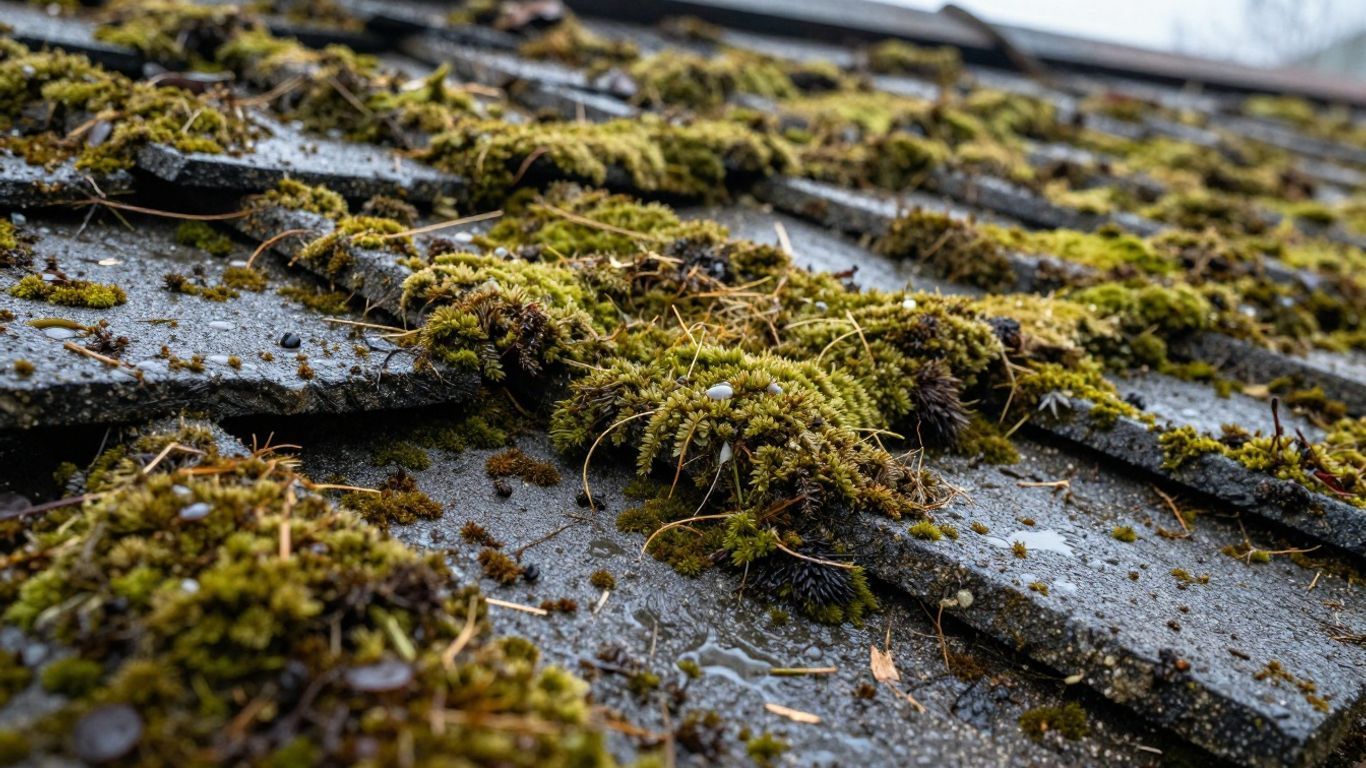
Spotting the problem early is key to preventing bigger issues. Algae often shows up first as faint greenish or bluish-gray patches. They tend to look a bit like a stain on the shingles. Moss, on the other hand, is a bit more obvious. It grows in thicker, carpet-like patches, usually in areas that stay damp the longest, like near valleys or under overhanging branches. You might also notice small, dark spots that could be the beginnings of lichen, which is related to moss. Keeping an eye on these subtle changes can save us a lot of hassle down the road.
We’ve found that a simple visual check from the ground with binoculars can often reveal the first signs. If you can safely access your roof, a closer look will confirm what you’re seeing.
Here are some common indicators:
- Greenish or bluish stains (algae)
- Thick, green, carpet-like patches (moss)
- Dark spots or crusty growths (lichen)
- Areas of the roof that stay wet longer than others
Effective Strategies for Moss and Algae Prevention
Dealing with moss and algae on our shingles, especially when spring brings that persistent dampness, can feel like a losing battle. But we’ve found that a proactive approach makes a big difference. It’s not just about cleaning up the mess after it appears; it’s about stopping it before it really takes hold. Implementing preventative roof shingle maintenance is key to keeping our homes looking good and our roofs healthy.
Implementing Preventative Roof Shingle Maintenance
We’ve learned that a little regular upkeep goes a long way. Think of it like weeding your garden – if you let it get out of hand, it’s a much bigger job. For our roofs, this means a few simple things:
- Keep Gutters Clear: Clogged gutters mean water sits around the edges of the roof, creating a perfect damp environment for growth. We make it a point to clear ours out at least twice a year, especially after leaves fall in autumn and before the heavy spring rains.
- Trim Overhanging Branches: Trees that droop over the roof cast shade and drop debris. This shade keeps the shingles wet longer, and the debris acts like a little blanket for moss to grow on. We trim back any branches that are too close.
- Improve Airflow: Sometimes, the way our houses are built can trap moisture. If possible, we look for ways to let air circulate better around the roofline. This might be as simple as ensuring vents aren’t blocked.
Choosing the Right Cleaning Solutions
When we do need to clean, we’ve found that using the right products makes all the difference. We avoid harsh chemicals that can damage the shingles themselves. Instead, we opt for gentler, more targeted solutions.
- Oxygen Bleach Formulas: These are great because they break down the organic matter causing the growth without being as tough on the roofing material as chlorine bleach. We usually mix it according to the product’s instructions.
- Vinegar Solutions: For very light algae growth, a diluted white vinegar solution can sometimes do the trick. It’s a more natural option, but we test it on a small, inconspicuous area first.
- Commercial Roof Cleaners: There are specific products designed for roofs that are effective. We always read reviews and choose ones that are biodegradable and safe for surrounding plants.
When cleaning, we always work from the top of the roof down. This way, we’re not washing dirt and cleaning residue back over areas we’ve already cleaned. We also make sure to rinse thoroughly to remove any cleaning product residue.
We’ve found that a combination of consistent, simple maintenance and using the right cleaning agents when needed keeps our shingles looking much better and prevents those unsightly patches from becoming a major problem.
Long-Term Roof Shingle Maintenance for Damp Climates
Keeping our roofs clear of moss and algae, especially when spring weather insists on being damp, requires a plan. It’s not just about a one-time clean; we need to think about the long haul. This means setting up routines and making smart choices about our homes.
Regular Inspections and Cleaning Schedules
We can’t just forget about the roof once it’s clean. For those of us in areas where moisture hangs around, a consistent check-up is key. Think of it like tending a garden; you can’t just plant and walk away. We should aim to get up there, or at least have someone do it for us, a couple of times a year. A good time is late spring, after the heavy rains, and again in the fall before winter sets in.
Here’s a simple schedule we can follow:
- Spring Inspection (April/May): Look for any signs of growth that might have started over winter. Check gutters for blockages that could hold water.
- Summer Check (July/August): A quick visual scan from the ground can often tell us a lot. If you see anything suspicious, plan a closer look.
- Fall Inspection (October/November): Clear out any fallen leaves or debris. This is also a good time to address any minor issues before the cold and wet of winter arrive.
- Winter Check (January/February): If accessible and safe, a brief look after a thaw can catch any early winter growth.
The goal is to catch problems when they are small and easy to fix. Ignoring them lets them get a foothold, making the job much harder later.
Considering Shingle Types Resistant to Growth
When it’s time to replace our roof, or even if we’re just thinking ahead, the type of shingle we choose makes a big difference. Some materials are just naturally better at resisting the kind of damp conditions that moss and algae love. We’ve found that certain shingles come with special treatments or are made from materials that don’t provide a welcoming surface for growth.
- Granule-Coated Asphalt Shingles: Many modern asphalt shingles have copper or zinc granules mixed into their surface. These metals are naturally antimicrobial and help prevent algae from taking hold. It’s a simple addition that works wonders over time.
- Composite or Synthetic Shingles: These can be made from various materials, including recycled plastics and rubber. Many are designed with a smooth surface that makes it harder for organic matter to stick and grow. Some even mimic the look of wood shakes but without the same susceptibility to moisture.
- Metal Roofing: While not a shingle, metal roofs are a great option for damp climates. They are very durable and don’t offer the organic material that moss and algae need to thrive. Water tends to run off them quickly.
When selecting new roofing materials, always ask about their resistance to biological growth. Manufacturers often provide data or warranties related to this, which can be a good indicator of long-term performance in humid or damp environments. It’s an investment in preventing future headaches and costly cleanings.
Choosing the right materials from the start can save us a lot of work down the road. It’s about building resilience into our homes from the ground up, or in this case, from the roof down.
Wrapping Up Our Shingle Care
So, as we’ve seen, that damp spring weather can really bring out the moss and algae on our roofs. It’s not just about how it looks, either; it can actually cause problems down the line if we let it get out of hand. We’ve talked about a few ways to tackle it, from simple cleaning to more preventative measures. Keeping an eye on your shingles, especially after a wet spell, is a good idea. A little attention now can save us a lot of hassle later on. We hope these tips help keep your roof looking good and working right through the season and beyond.
Frequently Asked Questions
Why does our roof get mossy and look green in the spring?
During spring, when the weather is often wet and humid, it creates the perfect environment for tiny plants like moss and algae to grow on our shingles. These little organisms love moisture, and the dampness from spring rain and dew gives them the water they need to start spreading. Also, shade from trees can keep the roof wet for longer, making it even easier for them to take hold.
What are the best ways to keep moss and algae off our roof?
To prevent moss and algae, we should regularly check our roof for any signs of growth and clean it before it becomes a big problem. Using gentle cleaning solutions designed for roofs can help remove any early growth. We can also trim overhanging tree branches to let more sunlight reach the roof, which helps it dry out faster. Sometimes, special shingles that resist this kind of growth are a good long-term choice.
How often should we check and clean our roof, especially in damp areas?
For roofs in areas that tend to be damp, it’s wise to inspect them at least twice a year, ideally in the spring and fall. We should also clean any visible moss or algae promptly. Establishing a regular cleaning schedule, perhaps annually or whenever we notice the first signs of growth, will help keep our roof in good shape and prevent bigger issues down the line.
The post moss and algae prevention on shingles in damp spring weather first appeared on Taylore Roofing.