February 3, 2026
Winter storms can be tough on our homes, and the roof takes a lot of the impact. After a big snow or ice event, it’s a good idea to check things over. We want to make sure everything is okay and catch any problems early. This can save us a lot of trouble and money down the road. Let’s look at some common signs that might mean we need roof repair after winter storm damage.
Key Takeaways
- Inspect the outside of your roof for any missing or broken shingles, and watch for ice dams or water stains that could signal leaks.
- Check inside your home, particularly on ceilings and walls, for any signs of water damage or leaks that may have started after the storm.
- Be aware of any unusual smells, like mustiness, or visible mold, which can indicate moisture problems needing prompt roof repair after winter storm events.
Inspect Your Roof For Visible Damage
After a harsh winter storm, it’s a good idea to take a close look at your roof from the ground. We often don’t think about our roofs until there’s a problem, but a little preventative inspection can save us a lot of headaches later. Our first step is to survey the roof’s exterior for any obvious signs of trouble.
Look For Missing Or Damaged Shingles
Shingles are our roof’s first line of defense against the elements. Winter storms, with their high winds and heavy snow, can really do a number on them. We should be on the lookout for a few key things:
- Curled or Buckled Shingles: These might look like they’re lifting up or bending. This often happens when moisture gets under them and then freezes and thaws.
- Cracked or Broken Shingles: A direct hit from hail or falling branches can cause shingles to crack or break apart.
- Missing Shingles: This is probably the most obvious sign. If you see bare spots where shingles should be, that’s a clear indicator of damage. We might even find shingles in our yard after a bad storm.
- Granule Loss: Shingles have tiny granules that protect them from the sun. If you see a lot of these granules collected in your gutters or downspouts, it means the shingles are wearing out and losing their protective layer.
Check For Ice Dams And Water Stains
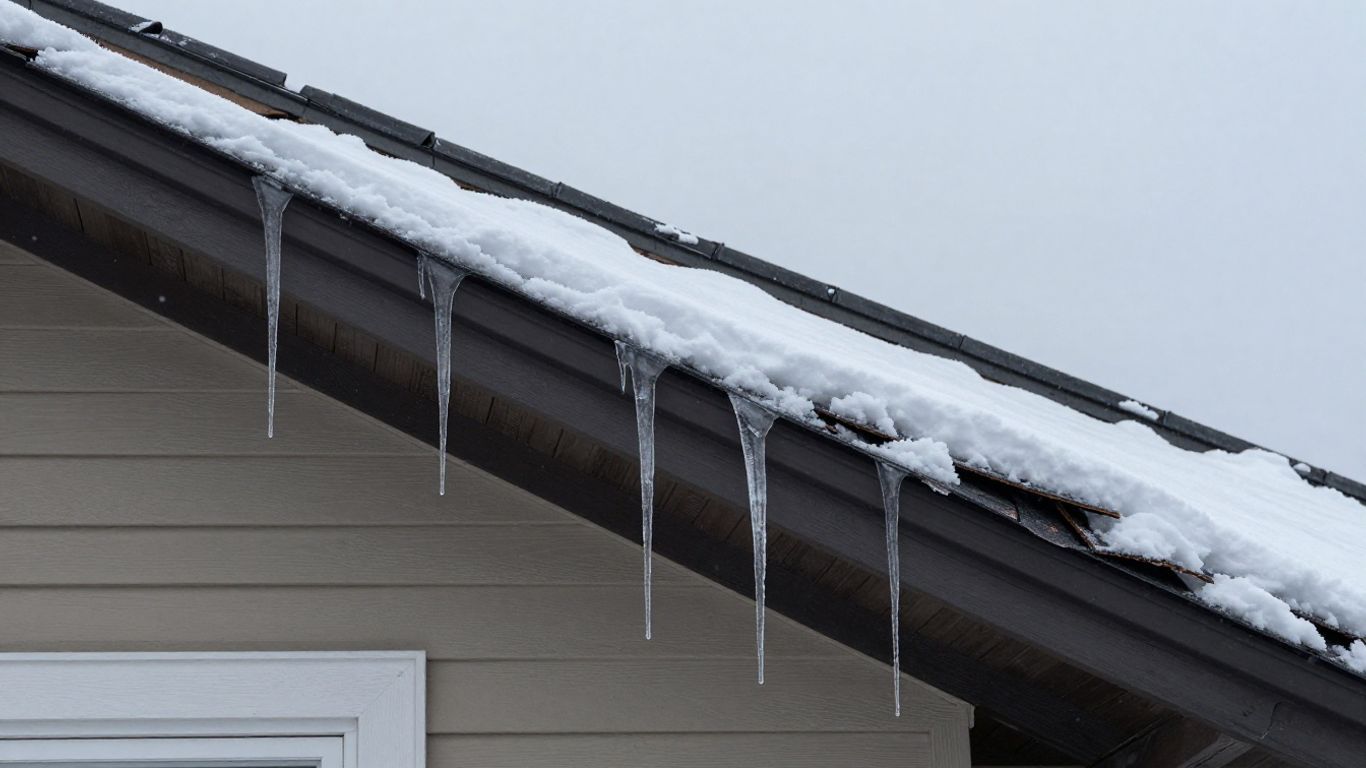
Ice dams are those ridges of ice that form at the edge of a roof, preventing melting snow from draining properly. They can cause water to back up under shingles and into your home.
- Ice Dams: Look along the eaves of your roof. If you see thick ridges of ice, especially if they seem to be holding back water, that’s an ice dam. Sometimes, you can see icicles hanging, but an ice dam is more about the buildup at the roof’s edge.
- Water Stains: While you might not be able to see water stains directly on the roof from the ground, keep an eye out for any dark or discolored patches that look damp or wet, especially after snowmelt. These could indicate where water has been pooling or seeping.
Sometimes, the damage isn’t immediately obvious. A storm might loosen shingles or create small openings that don’t start leaking until a significant amount of snow melts or rain falls. It’s always better to be safe than sorry and give your roof a thorough check.
We should also check our gutters and downspouts. Are they clogged with debris or ice? Clogged gutters can contribute to ice dam formation and water pooling, which puts extra stress on your roof and its drainage system.
Assess Interior Signs Requiring Roof Repair After Winter Storm
Sometimes, the damage isn’t obvious from the outside. We need to look inside our homes too, because the first signs of a compromised roof might show up on our ceilings or walls. It’s easy to forget about the roof once the snow stops falling, but water can still find its way in.
Examine Ceilings and Walls for Leaks
After a big storm, especially one with heavy snow or ice, we should keep an eye out for any new water spots or stains appearing on our ceilings. These can start small, maybe looking like a faint discoloration, but they can grow quickly if there’s an active leak. A small drip today could mean major water damage tomorrow. We also want to check the walls, particularly near the top, for any signs of dampness or streaks running down.
- Look for discolored patches, especially around light fixtures or vents.
- Feel the walls and ceilings for any unusual dampness.
- Note any new cracks or peeling paint, which can be caused by water intrusion.
Notice Any Musty Odors or Mold Growth
Another indicator that water might be getting into our attic or walls is a persistent musty smell. This often points to moisture that’s been sitting for a while, creating an environment where mold can start to grow. Even if we can’t see the mold directly, that smell is a warning sign. We should also check areas that are prone to moisture, like bathrooms or basements, for any signs of mold or mildew, as this could be related to a roof leak.
If you notice a persistent damp smell or see any signs of mold, it’s a strong signal that water is getting somewhere it shouldn’t be. Addressing this quickly can prevent more serious structural issues and health concerns down the line. Don’t put off investigating these interior clues; they are often the most direct way to know your roof needs attention.
Wrapping Up: What to Do Next
So, we’ve gone over some of the common ways winter storms can mess with our roofs. It’s easy to just forget about it once the snow melts, but taking a little time now to check things out can save us a lot of headaches later. We’ve talked about looking for missing shingles, checking for dents, and even keeping an eye on the attic for any water spots. If anything looks off, don’t just ignore it. Getting a professional to take a look is usually the best bet. They’ve got the tools and know-how to spot problems we might miss and fix them right. A little bit of attention now means a safer, more solid roof over our heads for the rest of the year.
Frequently Asked Questions
What should we look for on our roof after a big snow or ice storm?
After winter weather, we should carefully check our roof from the ground if possible, or from a safe ladder. We’re looking for any shingles that might be bent, cracked, or completely missing. Also, keep an eye out for any big piles of ice built up along the edges of the roof, which we call ice dams. These can cause water to back up where it shouldn’t.
How can we tell if our roof is leaking inside our home?
We need to examine the ceilings and walls inside our house. If we see any new wet spots, drips, or discoloration, that’s a clear sign water might be getting in. Sometimes, you might notice paint peeling or bubbling on the walls or ceiling, which can also point to a moisture problem originating from above.
Are there any smells or other signs inside that mean our roof needs fixing?
Yes, definitely. A musty or damp smell, especially in the attic or near the top floors, is a big clue. This often means there’s been a slow leak and moisture has been sitting, which can lead to mold or mildew growth. If we see any dark spots or fuzzy patches that look like mold, we should address the roof issue right away.
The post How to Spot Signs of Roof Damage After a Winter Storm first appeared on Taylore Roofing.